
Turkish Airlines ile Güney Kore & Japonya Turu 11 Gün (Seul - Tokyo - Kyoto - Osaka) Wait, I should correct that: the translation should be the English equivalent, not a repeat of the Turkish. Turkish Airlines South Korea & Japan Tour 11 Days (Seoul - Tokyo - Kyoto - Osaka)
1 April 2027 – 10 April 2027
|
8 Nights, 10 Days
Tour Departures
05 – 14 March 2027 · 4* Hotels
Departure
01 Apr, Thu
Return
10 Apr, Sat
Duration
9 Days
Tour details
The Flower and Sun of the Far East: South Korea and Japan
Seoul (2 nights) – Tokyo (3 nights) – Hakone – Kyoto (2 nights) – Nara – Osaka (1 night)
All city tours, TeamLab Digital Art Museum, kimono rental, tea ceremony and entrance fees included. Flight between South Korea and Japan included. Travel experience on Shinkansen, the world's first high-speed train, included.
Ramadan Bayram Special Tour · 05 – 14 March 2027 · 8 Nights – 10 Days
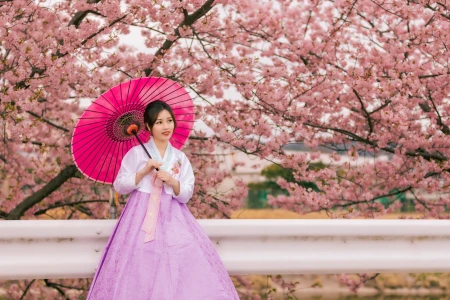
In Seoul: Gyeongbokgung Palace, Namsangol Hanok Village, Aegibong Ecopark and N Seoul Tower; in Tokyo: TeamLab Planets, Shibuya Crossing and Harajuku; boat trip on Lake Hakone; in Kyoto: Arashiyama Bamboo Forest, Golden Pavilion and a tea ceremony in kimono; in Nara and Osaka: Todaiji Temple, Osaka Castle and Dotonbori will be visited.
Flights: TK20 (Istanbul–Seoul), OZ102 (Seoul–Tokyo), TK87 (Osaka–Istanbul). Scheduled flights operated by Turkish Airlines.
What's included
- Round-trip economy class airline ticket on the Istanbul-Seoul / Osaka-Istanbul route with scheduled Turkish Airlines flights
- One-way economy class airline ticket on the Seoul/Tokyo route
- Airport taxes
- Travel by Shinkansen high-speed train
- A total of 8 nights accommodation in the specified or similar hotels
- Breakfasts as stated in the program
- Aegibong (Korean DMZ Area) tour
- Seoul Tour
- Osaka Tour
- Kyoto Tour
- Arashiyama Bamboo Forest Tour
- Nara Park Tour
- Tokyo Tour
- Kimono Rental
- Tea Ceremony
- TeamLab Digital Art Museum
- Airport – hotel – airport transfers
- All tours and entrance fees specified in the program
- Turkish-speaking guide service
- Professional liability insurance (in accordance with Law No. 1618)
Not included
- Overseas departure tax
- K-ETA Korea electronic travel authorization
- Personal expenses
- Tour guarantee and travel health insurance
- All services not explicitly stated as included in the tour program
- Tips (5 EUR per person per day, to be collected by the guide)
Need to Know
Things You Need to Know Before Departure
South Korea and Japan are two countries where courtesy and order come first. For a comfortable and trouble-free trip, we recommend reading the notes below in advance.
Travel Documents
- A K-ETA application is mandatory for South Korea. You must complete the application before your trip, through the official K-ETA website.
- There is no visa requirement for Turkish citizens for Japan.
- A chip passport is required. Check in advance that your passport has sufficient validity on your travel date.
- Carry a photocopy and a digital copy of your passport separately from your luggage.
Climate and Season
- Early March is a cool and changeable period in both countries. Mornings and evenings in Seoul can be noticeably cold. Tokyo, Kyoto and Osaka are milder.
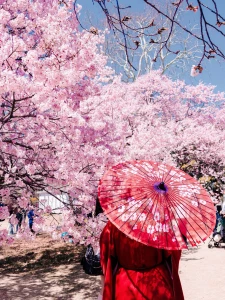
- The cherry blossom season usually begins at the end of March. We cannot guarantee blossoms at this time, as it depends on natural conditions.
Transportation and Luggage
- Throughout the program, the Shinkansen (bullet train) and urban public transport are used. At train stations and in the metro, stairs and walking distances are considerable.
- Large and heavy suitcases become tiring on this route. We recommend one medium-sized, wheeled suitcase and a small hand bag.
- Baggage allowance on the flight between South Korea and Japan is subject to the rules of the relevant airline. We recommend confirming your baggage allowance before the trip.
Food and Halal Sensitivity
- Pork, seafood and alcohol-based sauces are common in the cuisine of both countries. The number of halal-certified restaurants is limited.
- If you have a special dietary preference, allergy or sensitivity, please be sure to mention it during reservation so that we can plan accordingly.
- The trip coincides with the Ramadan Bayram period. We recommend planning your meals and worship with this period in mind.
Local Customs and Behavioral Rules
- Silence is essential on public transport. Phone calls are not made loudly.
- Eating while walking and leaving litter are not welcomed. Since there are few trash bins, carry your waste with you.
- Shoes are removed at temples and traditional accommodations. Shoes that are easy to take off and put on will make things easier.
- Tipping is not customary in Japan, and it is not mandatory in South Korea either.
- Photography is restricted at some temples. Please follow your guide's instructions.
Money and Communication
- The currencies are the Japanese Yen (JPY) and the South Korean Won (KRW). Cash is still preferred at small businesses in Japan, so carry some cash with you.
- An open-account credit card for use abroad and a spare card are recommended.
- We recommend using an eSIM or a local SIM card for internet access abroad.
Health and Insurance
- Take any medications you use regularly in their original packaging and, if necessary, with a doctor's report.
- Travel health insurance is not included in the package price. We recommend arranging your own health and travel insurance before departure.
What to Bring?
Pack These for Your Suitcase
In early March, the weather in the Far East is cool and changeable, and the itinerary includes plenty of walking. We recommend packing your suitcase using a layering approach.
Documents
- Chip passport and a photocopy
- K-ETA approval printout (for entry into South Korea)
- Flight ticket and reservation documents
- Your travel health insurance policy
Clothing
- A warm coat or windproof outerwear, especially for Seoul
- Thin sweaters, cardigans and long-sleeved tops to layer according to the cold
- Hat, scarf and gloves
- A small umbrella or rain jacket for rain
- Light, comfortable clothing for the evenings
Footwear
- Comfortable, walking-friendly, non-slip shoes are the most important item. You will be walking long distances each day.
- Since you will be taking your shoes off at temples and some venues, bring shoes that are easy to slip on and off, along with clean socks.
Electronics
- Power outlets in Japan differ from those in Turkey (Japanese outlets have two flat pins and the voltage is 100 V). Buy a universal travel plug adapter.
- In South Korea, 220 V is used with round-pin outlets similar to those in Turkey.
- Charger, power bank (carry it in your hand luggage on the plane) and a camera.
- A memory card or sufficient phone storage. There will be a lot of photos to take.
Personal Items
- Any regular medications (in their original packaging) and basic first-aid supplies
- Sunglasses, moisturizer and lip balm. March air can dry out the skin.
- A small backpack and a foldable tote bag. You will carry them with you throughout the day.
- Cash (JPY and KRW) and a credit card enabled for international use
Small but Very Useful
- Tissues and hand sanitizer
- A small hand towel. Public restrooms may not have paper towels or hand dryers.
- Leave some extra space in your suitcase for items you'll pick up while shopping on the way back.
Tour Program
Thursday, 01 April 2027 / Istanbul - Seoul
Our tour begins with our meeting at 13:50 in front of the Turkish Airlines counter at the international departures gate of Istanbul Airport. After our ticket, baggage and passport procedures, we set off for Seoul at 16:50 on Turkish Airlines flight TK20. Tonight we will be on the plane.
Friday, April 2, 2027 / SEOUL
We land at Seoul Incheon International Airport at 08:35 local time. After our passport and baggage procedures, we begin our tour with our vehicle waiting for us at the airport. The first stop on our tour will be Gyeongbokgung Palace. Built in 1395, the palace is considered the largest and also the most beautiful and most magnificent of the Five Grand Palaces built by the Joseon Dynasty. We continue on to our next stop, Namsangol Hanok Village. Located at the foot of Namsan Mountain, this village gives a sense of journey to the past with its restored traditional "hanok" houses, peaceful gardens and authentic atmosphere. Here we will have the opportunity to closely see Korean living culture, architectural details and traditional order. On the way, we will also see the former Blue House and Gwanghwamun Square. After our visit, we will move on to Insadong Street, famous for its traditional tea houses, art galleries and souvenir shops. Following the free time we will have here, the last stop of our tour will be Myeongdong Street, one of Korea's most popular shopping and fashion streets. After exploring this lively district, filled with cosmetics stores, local restaurants and international brands, we will have our dinner and head to our hotel. We will complete our check-in procedures and settle into our rooms. Our overnight stay is at our hotel in Seoul.
Saturday, 03 April 2027 / SEOUL
After breakfast at our hotel, our first stop will be Aegibong Ecopark. Located in the only Demilitarized Zone between South Korea and North Korea, the Aegibong Peace Ecological Park is meaningful because it sits at the mouth of the Han River, where it merges with the Jogang River, which connects places with different histories and cultures. From here, we will have the opportunity to observe North Korea's Propaganda Village on the opposite bank of the Han River and the North Korean farmers working in the fields. Afterwards, from the observatory, we will be able to see North Korean territory and the border line, and we will continue our tour with N Seoul Tower, a communications tower and observatory. After reaching the tower by cable car, we will be able to view the city from the highest point in Seoul. Then, we set off to see the Gangnam Style Statue. Shortly after, we visit the nearby Starfield Library. Our next stop will be Bongeunsa Temple, which has a 1,200-year history. Considered a cornerstone of Korean Buddhism, Bongeunsa, which is home to Maitreya, one of the largest statues in Seoul, and a library with 3,479 sacred Buddhist scriptures, is among the structures that attract tourists to the area. After our tour, we will have dinner and return to our hotel. Our overnight stay is at our hotel in Seoul.
Sunday, April 4, 2027 / SEOUL - OSAKA
Today, the day will start a little earlier for us. We leave our hotel at the scheduled time and head to the airport. We depart for Osaka on flight OZ112 at 07:55. We land at Osaka Kansai Airport at 09:40 local time. After passport and baggage procedures, we begin our Osaka Tour from the airport by our vehicle. Our first stop will be Osaka Castle, built in the 16th century and which played an important role in the unification of the Japanese nation. The castle is located within a park covering an area of approximately two square kilometers in total, containing plenty of green spaces, sports facilities, a multi-purpose arena (Osakajo Hall), and a shrine dedicated to Toyotomi Hideyoshi. Then we continue our tour with Kuromon Ichiba Market. We will have free time for shopping at this large market, where vendors sell street food, fresh fruits and vegetables, seafood, and souvenirs. After free time, we will see Dotonbori, which has become the entertainment center of Osaka. Following our visits to Dotonbori and Shinsaibashi, the city's main shopping district, we will have dinner and then head to our hotel in Osaka. We complete our check-in procedures and settle into our rooms. We will spend the night at our hotel in Osaka.
Monday, 5 April 2027 / OSAKA - NARA - KYOTO
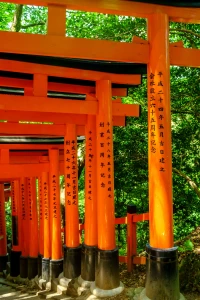
After breakfast at our hotel, we check out and set off for Nara and Kyoto. We begin our Nara tour with Todai-ji Temple. Besides being the largest wooden structure in the world, Todai-ji also houses the largest Buddha statue in the world. After Todai-ji, we visit Nara Park, where more than 1,200 wild Sika deer roam freely. Because of these deer, Nara is also known as the deer park. After our Nara visit, we continue our journey towards Kyoto. Upon arriving in Kyoto, we will visit Fushimi Inari Shrine, a Shinto shrine. After the free time we have set aside, we will visit Kinkakuji Temple, also known as the Golden Pavilion, which is listed as a UNESCO World Heritage Site. The temple is internationally recognized as a flawless example of Kitayama garden design. We complete our visit here and set off for dinner. After dinner, we head to our hotel. We will spend the night at our hotel in Kyoto.
Tuesday 6 April 2027 / KYOTO
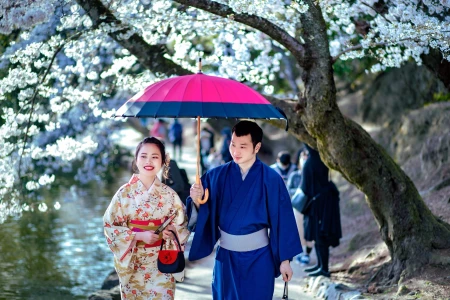
After breakfast at our hotel, we begin by visiting the Arashiyama Bamboo Forest. The forest has a 500-meter walking trail where we can stroll and listen to the sounds created as the wind passes through the bamboo. Afterwards, we head to a kimono shop, one of the most colorful experiences of our tour. There, after renting our kimonos, we experience the traditional Japanese tea ceremony. Following free time for lunch, we visit Kiyomizu Temple, one of Kyoto's most iconic temples and a UNESCO World Heritage Site. The temple offers beautiful views of the distant city of Kyoto, as well as numerous cherry and maple trees that burst into a colorful sea in spring and autumn. After visiting the temple, we walk through the Ninenzaka and Sannenzaka streets, famous for their traditional wooden houses, souvenir shops, and historic character. After free time there, we visit Gion, Kyoto's famous geisha district. During our visit to Gion, we will see the shops, restaurants, and Ochaya (teahouses) where Geiko (the name given to geisha in Kyoto) and Maiko (Geiko apprentices) spend their time and go shopping. After the program, evening falls and we return to our hotel. We will spend this night in Kyoto. _**Note: The large suitcases gathered this morning will be transferred by cargo to our hotel in Tokyo and will reach us the next day. For this reason, we need to take the items we need for tonight with us in a small bag.
Wednesday, April 7, 2027 / KYOTO - HAKONE - TOKYO
Early in the morning, after completing our check-out procedures from our hotel in Kyoto, we set off on a pleasant journey from Kyoto to Odawara Station aboard the Shinkansen, Japan's famous high-speed train. Along the way, we will have the opportunity to enjoy the impressive views of the Japanese countryside. After arriving in Odawara, we continue to the Hakone region by our private vehicle. Here, we join the Lake Ashi boat tour, where we will experience nature up close. On clear days, we may also have the chance to see the silhouette of Mount Fuji from the lake. After the boat tour, we will have free time in the region. Following our free time, we head to Gotemba Premium Outlets, one of Japan's most popular shopping stops. Here, we can shop at stores of world brands at affordable prices and enjoy our time with views of Mount Fuji. At the end of the day, we leave Gotemba and continue toward Tokyo, considered the heart of Japan. In the evening, we check in to our hotel in Tokyo and settle into our rooms. Overnight at our hotel in Tokyo.
Thursday, 8 April 2027 / TOKYO
After breakfast at our hotel, we begin with the TeamLab Planets Digital Art Museum, which presents one of the most impressive examples of digital art. Then we head to Ginza, Tokyo's most luxurious shopping district, and get a close feel for the modern atmosphere of Tokyo. Following the free time we will set aside, we continue our tour with a visit to Akihabara, one of the most famous neighborhoods in the world. Akihabara is an extremely crowded shopping area known for its electronics stores of all kinds, from small street stalls to very large shopping centers. Our next stop will be Asakusa Temple (Senso-ji Temple), a Buddhist temple considered one of the oldest and most colorful temples in Tokyo. Our next point will be the temple also known as Sanja-jinja (Shrine of the Three Gods). It is one of the rare temples in Tokyo that survived the bombing attacks in the final year of World War II, and for this reason the original structure of the building remains intact. Here we will also see the shopping street called Nakamise in the area. At the end of the day, we will have our dinner and return to our hotel. Overnight stay at our hotel in Tokyo.
9 Nisan 2027 Cuma / TOKYO Wait, I should correct that: the translation of the date line is: Friday, 9 April 2027 / TOKYO
After breakfast at our hotel, we check out and continue our Tokyo tour. Our first stop will be Meiji Shrine, a Shinto shrine dedicated to the spirits of Emperor Meiji and Empress Shōken. Then we head to Harajuku and Takeshita Street, home to small, youth-oriented independent boutiques and cafés. A delightful exploration awaits us in this area, famous for its colorful boutique shops, anime-themed cafés and street food. After our scheduled free time, we move on to the Shibuya Crossing (Shibuya Scramble Crossing), one of the first images that comes to mind when Tokyo is mentioned. After a photo stop at one of the busiest pedestrian crossings in the world, we see the Hachiko Statue, famous for its loyalty. Then we visit the Shinjuku district, known for its entertainment, restaurants and neon lights. At the end of the day, we have dinner and return to our hotel. Tonight, we are in Tokyo.
Saturday, 10 April 2027 / TOKYO - ISTANBUL
After breakfast at our hotel, the whole day in Tokyo is ours. We will have free time for shopping or any personal activities you would like to do. Then, at the designated time, we head to Tokyo Haneda Airport. After our ticket, baggage and passport procedures, we fly with Turkish Airlines flight TK199 at 21:45 to Istanbul. We will spend the night on the plane. Our arrival time at Istanbul Airport is 05:05 (April 11, 2027).